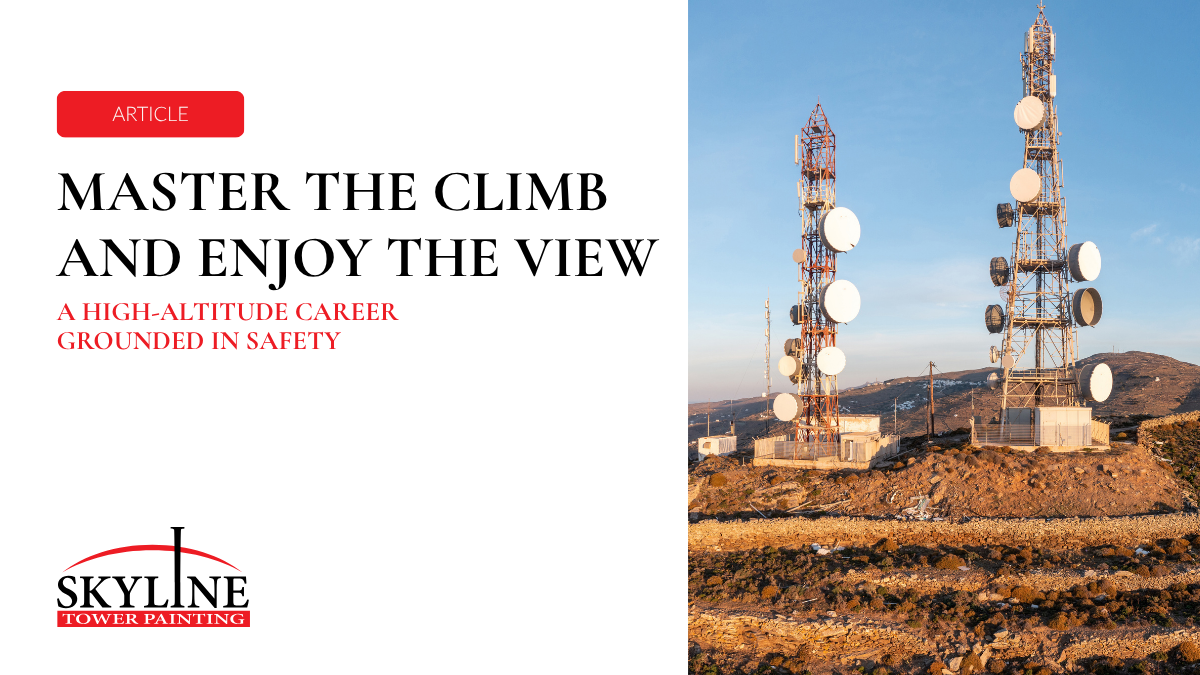
Tower painting is not an ordinary job, and that is part of what makes it rewarding.
It is demanding work that calls for focus, physical ability, technical skill, and a steady approach to working at height. Some days begin before sunrise at a site far from home. Others end with a view that stretches for miles. For the people who choose this line of work, every project brings a new setting, a new structure, and a chance to contribute to something communities rely on every day. Still, none of that matters without safety.
At Skyline Tower Painting, safety is built into the work from the very beginning. It guides how our crews prepare, how they climb, how they communicate, and how they make decisions once they are on the structure. We perform tower work nationwide using trained rope-access techniques and established safety protocols for antenna, communication, broadcast, and water-tower painting projects.
It Starts Before the Climb
The safest climbs are planned well before anyone leaves the ground.
Before work begins, the crew studies the structure and the job ahead. They consider access points, the equipment required, the condition of the site, and the forecast for the day. A tower can look very different from one project to the next, and changing conditions can affect the plan just as quickly. Good preparation gives the crew a clear starting point, but it also gives them the awareness to adjust if something on site changes.
Communication is a major part of that process. Everyone needs to know what they are responsible for and how the work will be carried out. If a condition no longer matches the original plan, a professional crew stops, evaluates the situation, and determines the appropriate next step.
Tower work comes with real hazards. OSHA identifies risks such as falls, structural concerns, weather, electrical exposure, radio-frequency exposure, and falling objects in communications-tower work. That is why training, planning, and accountability must be part of every job, not treated as an afterthought.
Training Builds Real Confidence
Working at height requires more than a willingness to climb. A strong tower climber knows these four things:
- How to move deliberately
- Secure equipment properly
- Stay aware of the work area
- Remain connected to the people below.
That level of confidence is developed through training and experience. It comes from understanding the systems in place and trusting the process, especially when conditions are challenging.Skyline Tower Painting has invested in Advanced Tower Climber Safety and Rescue Training, including a Train-the-Trainer component. That investment helps ensure our team has the knowledge to perform the work responsibly and respond appropriately when a situation calls for it.
Proper equipment plays an important role, but equipment is only as effective as the people using it. OSHA requirements and industry best practices reinforce the need for fall-protection systems, routine equipment inspections, job-specific planning, and rescue preparedness. The goal is not simply to get the job done; the goal is to complete it the right way, every time.
More Than a Different View
The views are one of the most recognizable parts of tower work, and they never get old. A climb can offer a perspective most people will never see, whether that is a city waking up below, open farmland in every direction, or a quiet stretch of road disappearing into the distance. Yet the appeal of this work goes beyond the height.
Tower painting gives people the opportunity to travel, work in different parts of the country, and take on projects that rarely feel repetitive, rather than reporting to the same place every day. That variety suits people who enjoy being outdoors, working with their hands, and seeing tangible progress at the end of the day.
Communications, broadcast, and water infrastructure are part of everyday life, so there is also a sense of purpose in the work. Maintaining those structures requires skilled professionals who are willing to take on highly specialized work with care and discipline.
Skills That Carry Forward
Tower work develops capabilities that reach well beyond a single project. Over time, climbers gain invaluable experience and practical skills that apply across many types of maintenance and infrastructure work.
Being a tower climber can also provide a durable career path for people who invest in their training and build a reputation for doing things well. Telecommunications infrastructure needs ongoing installation, maintenance, repair, and modernization, and the field continues to create openings as experienced workers retire or move into different roles. The U.S. Bureau of Labor Statistics projects an average of about 20,300 annual openings for telecommunications technicians between 2025 and 2035.
No career field is guaranteed to look the same from year to year. However, professionals with technical ability, reliable safety habits, and experience in essential infrastructure are well positioned to pursue opportunities as projects and needs evolve.
A Crew That Looks Out for Each Other
Even when one climber is high above the ground, tower work is never a one-person job. The best crews stay aware of one another throughout the day. They check equipment, talk through the work, monitor weather conditions, and communicate clearly when something needs attention. Those habits might seem routine, but they are what create a strong safety culture over time.
At Skyline Tower Painting, we believe professionalism means having the discipline to slow down when necessary. A schedule matters, but no deadline is more important than making the right decision for the crew.
Tower painting is a career for people who want more from the workday. It offers travel, challenge, unique views, specialized training, and the satisfaction of helping maintain structures that serve people every day. But it all starts with respect for the climb and a commitment to doing the work safely.
At Skyline Tower Painting, that commitment comes first.